 Skip to main content
Mortality in England & Wales at older ages hit another record low in 2025. The conventional view is that mortality remains above pre-pandemic projections. But an alternative approach, using updated methods, suggests that may not be the full story.
Mortality in 2025
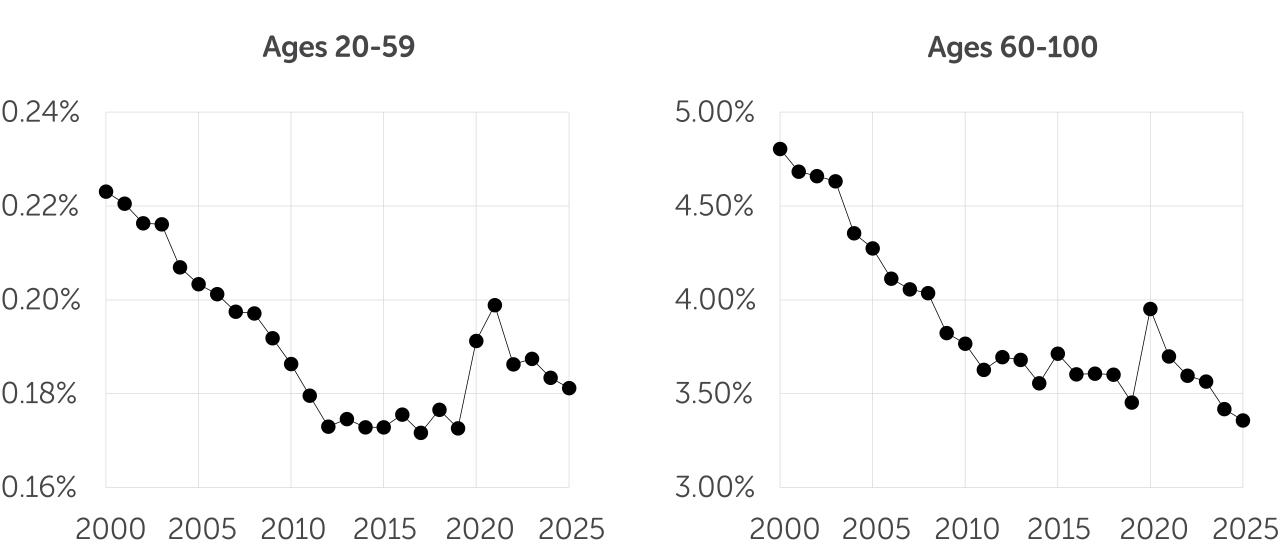
Figure 1 shows unisex age-standardised mortality rates (ASMRs) for England & Wales for ages 20-59 and 60-100.
Both age groups show a strong fall in mortality up to 2011, a flatter period to 2019, and a spike in mortality in 2020. But there’s a striking contrast between the age-groups in later years. While mortality at retirement ages in 2025 was lower than ever, despite a lot of noise about influenza in recent weeks, mortality at younger ages remains stubbornly high. Our recent blog discusses the drivers of working-age mortality.
Figure 1: Unisex ASMRs for England & Wales
Comparison to pre-pandemic projections
Record low mortality (at least at older ages) sounds like good news, and it’s certainly better than the alternative, but frequent record lows should be expected when mortality is improving. Figure 1 shows new record lows for both age groups in every year from 2000 to 2011.
We can get an idea of how good recent mortality has been by comparing it to what we would have expected, based on a projection made before the pandemic.
Figure 2 compares actual mortality (the same ASMRs as Figure 1) to a projection from CMI_2019 - the latest version of the CMI Model before the pandemic - that uses an indicative long-term rate of 1.5% p.a.
For ages 20-59, mortality in 2025 was very different to the CMI_2019 projection – 9% higher. And while mortality for ages 60-100 has fallen since 2019, it hasn’t fallen as much as anticipated by CMI_2019.
Figure 2: Actual ASMRs compared to published CMI_2019 and CMI_2024 projections
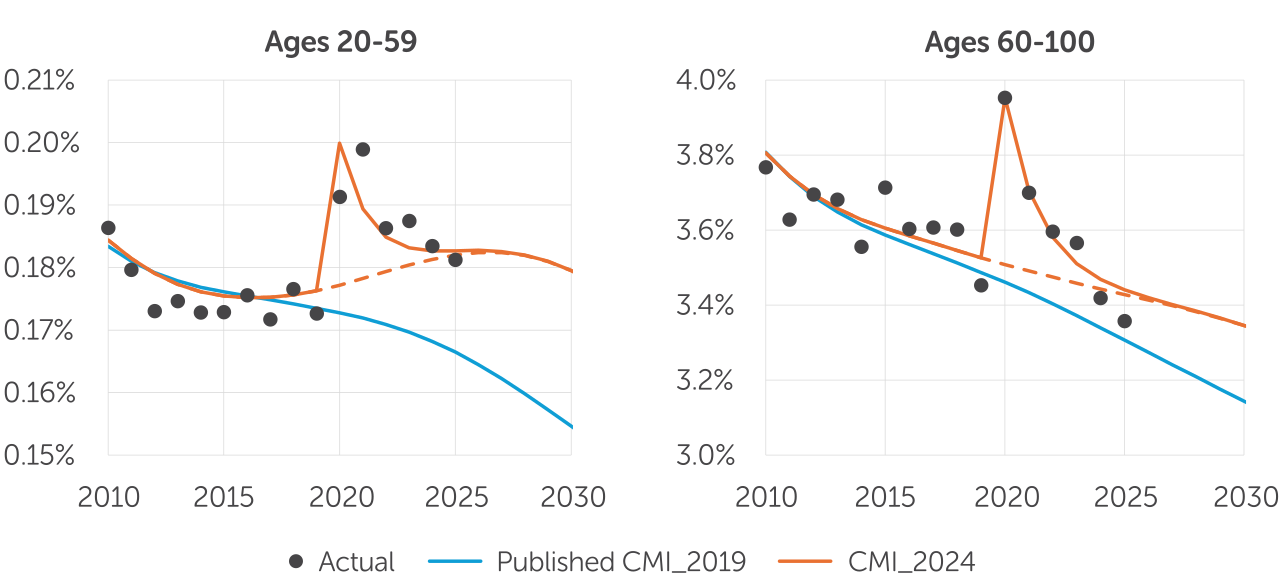
We also show a projection from CMI_2024, the latest version of the CMI Model. The CMI has indicated that a business-as-usual version of the next version, CMI_2025, would result in lower projected mortality and higher life expectancies but has not yet confirmed the methods that it will use for CMI_2025.
Improvements in methods
While CMI_2019 provides a somewhat useful benchmark for recent mortality, it doesn’t take account of improvements in methods made by the CMI in recent years.
CMI_2019 had a single ‘period term’, but CMI_2024 saw the introduction of ‘multiple period terms’ with five period terms in the core version. That change was made to better reflect different trends in mortality at different ages. Other relevant changes in CMI_2024 include the way in which cohort constraints are applied and reducing cohort convergence periods at younger ages.
We have considered a ‘counterfactual’ version of CMI_2019 which uses the methods from CMI_2024 but applies these to data from 1979-2019, as in CMI_2019. Figure 3 is similar to Figure 2 but the green lines for CMI_2019 are for this counterfactual version.
Figure 3: Actual ASMRs compared to a counterfactual CMI_2019 and published CMI_2019 and CMI_2024 projections
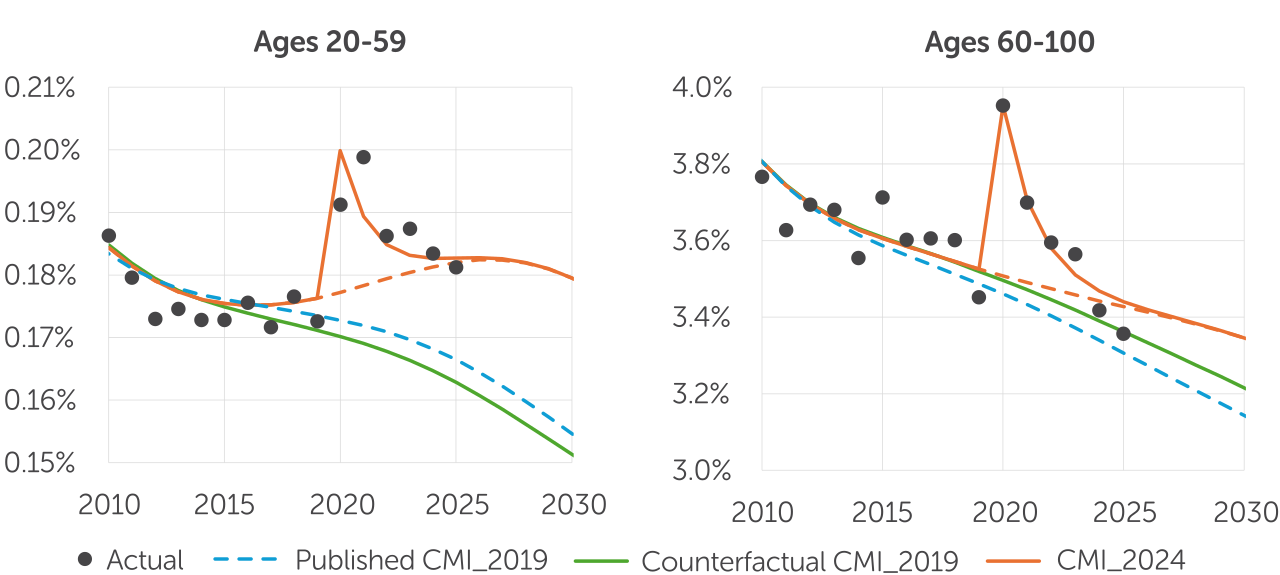
While the broad picture is similar for Figure 2 and Figure 3, there are some differences. The counterfactual version of CMI_2019 gives lower projected mortality than the published version at younger ages and higher projected mortality than the published version at older ages. This shows the impact and importance of different methods and the improvements made in CMI_2024.
Mortality at older ages in 2025 was higher than the published CMI_2019 projection (blue line), but matches the counterfactual projection (green line).
Back to normal?
Is mortality back to normal? Clearly not for younger ages, but it’s a cautious ‘yes’ at older ages.
There’s always room for debate over what is ‘normal’ – much like the debate over different measures of excess mortality during the pandemic. But mortality at older ages for 2025 was similar to the CMI_2019 counterfactual, which is quite a challenging target as it was influenced by the unusually low mortality for the time in 2019. If we had instead compared to a CMI_2018 counterfactual, mortality for both 2024 and 2025 would have been below it.
So, older age mortality does seem to have returned to the post-2011 trend, which seems as good a measure of normality as any. That’s good news, although we’re still a very long way behind the exceptional 2000-2010 trend.

Press and media enquiries
For more information, please contact our press team on +44 149 478 8813 or via email.
Email us
Latest insurance insights
Explore further commentary and insights from Barnett Waddingham's expert insurance consulting and longevity team.
Find out more