 Skip to main content
We don’t yet have the final requirements and nor do we know exactly when they will come into force, but there’s no doubt big change is coming and administering authorities should already be planning for them.
In this blog we set out where the proposals have got to and what funds should be doing to prepare.
What are the proposed changes?
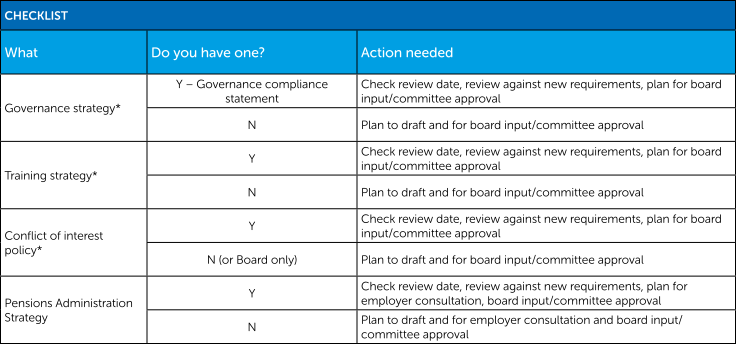
- New statutory strategies and policies
- Appointment of a Senior LGPS Officer (in place by 1 October)
- Appointment of the Independent Person (in place by 1 October)
- New knowledge and understanding requirements
- Independent governance reviews (first complete by 31 March 2028)
Where have we got to?
It’s been five years since the publication of the final Good Governance report for the Scheme Advisory Board, and most of the recommendations are close to becoming reality. However, despite the governance proposals in Ministry of Housing, Communities and Local Government’s (MHCLG) 2025 Fit for the Future consultation being largely welcomed, the road is not smooth:
- The proposals are wrapped up in the wider pensions review, so rely on the passage of the Pension Schemes Bill.
- The Bill was expected to come into force on 1 April 2026, but at the time of writing is still in the Lords (at report stage). Any so-called legislative ping pong will delay the final version receiving Royal Assent.
- The Government has not yet responded to its technical consultation on regulations required to implement the governance changes.
- The changes rely on detailed guidance. The draft statutory guidance is incomplete in some areas and lacks clarity in others.
Despite the uncertainty with the legislation and accompanying guidance, MHCLG is expecting funds to push ahead with planning for and implementing the Fit for the Future governance changes. We consider below what funds should be doing now.
What should administering authorities be doing?
New statutory strategies and policies
Many administering authorities may already have policies in place, in which case it may simply be a case of reviewing them to ensure they meet the new requirements.
New appointments
Within six months of the regulations coming into force, so expected to be by 1 October 2026, administering authorities need to have appointed:
1. A senior LGPS officer, a senior role with responsibility for:
- all pension functions of the administering authority;
- representing the interests of the fund within the authority’s senior management team; and
- participating in the governance structures of the pool.
The role must not be combined with significant non-fund roles and cannot be fulfilled by the section 151 officer. Existing roles can be designated as the senior LGPS officer as long as the requirements are met.
2. An independent person, a key role which is expected to include supporting:
- the pensions committee, as a non-voting member of the committee;
- the senior LGPS officer; and
- the chair of the local pensions board.
Appointees need to have a strong pensions background (although not necessarily of the LGPS) and be PMI qualified; a member of and accredited by the Association of Professional Pension Trustees or have significant experience of pensions.
To be independent, they must not be employed by a company that is the fund’s actuary or is carrying out the Independent Governance Review. Existing independent investment advisers can only be appointed to the new role if the administering authority is satisfied that they have significant governance and administration experience.
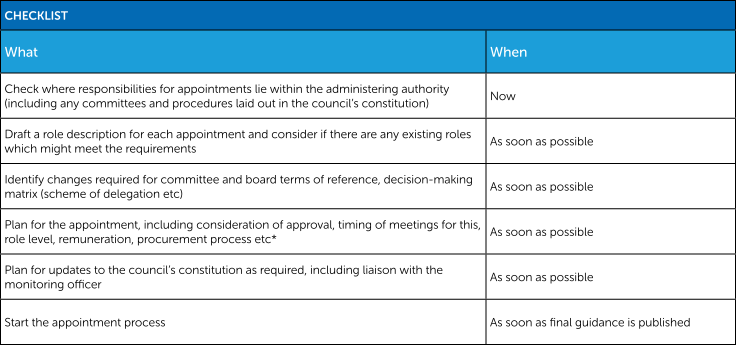
*this will vary between the senior LGPS officer and independent person roles but the principles are the same in terms of planning for the appointment process.
Some administering authorities may also wish to take the opportunity to make other improvements/changes to their governance documents. For example, this could include updating terms of reference and discretions policies, as well as developing a roles and responsibilities matrix where one is not already in place.
Knowledge and understanding requirements
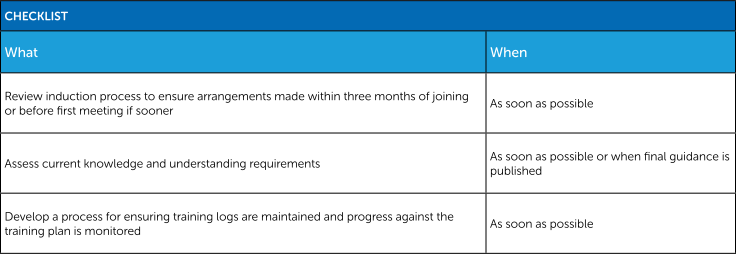
Pension committee members, the senior LGPS officer, other officers with delegated responsibilities and possibly the independent person (the draft guidance is slightly contradictory on this), will need to demonstrate knowledge and understanding appropriate to their respective roles. Inductions should be organised within three months of the appointment or the first meeting if sooner.
Administering authorities will need to ensure that their training strategy sets out how this will be achieved and develop processes for logging and reporting on training. The draft guidance also says that there should be an annual assessment of knowledge and understanding.
Independent Governance Reviews (IGR)
Administering authorities will need to commission a periodic IGR within every valuation period, with the first one due by 31 March 2028. There is flexibility on timing, so reviews do not need to take place at the same time every three years.
The proposed remit is very wide. As a minimum, the draft guidance says an IGR should cover:
- Business planning and performance delivery
- Effective systems of governance and internal controls that detail how the scheme is run, including decision-making and meetings, and the approach to risk management
- Compliance with legislation, guidance and fund strategies and policies
The IGR report needs to rate the authority’s performance in each area (we understand the ratings proposed in the draft guidance are being reconsidered by MHCLG and include recommendations. The report needs to be published and shared with the Secretary of State and an action plan developed where appropriate.
To be independent, an IGR can only be undertaken by a company or person who is not otherwise engaged by the authority. So it cannot, for example, by undertaken by a company which is appointed as the fund’s actuary.
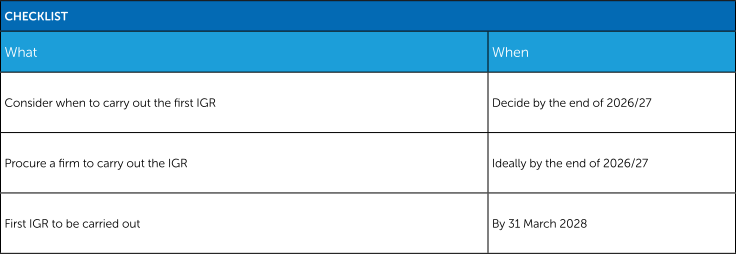
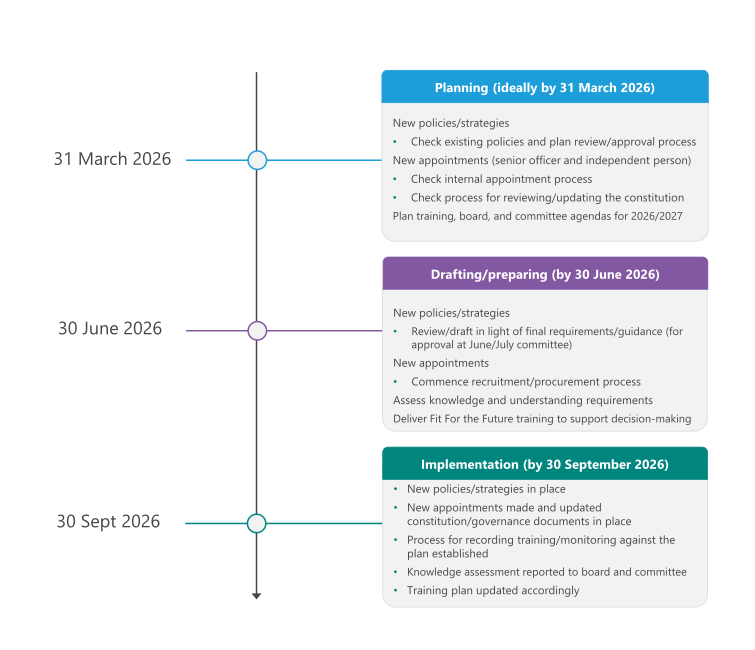
Planning and implementation schedule
How might funds planning to meet the Fit for the Future requirements look in 2026?

Press and media enquiries
For further information, please contact our press team on +44 149 478 8813 or via email.
EMAIL US
Stay up to date
Get the latest independent commentary and exclusive insights from a range of experts at the forefront of risk, pensions, investment and insurance – tailored to your preference.
Subscribe today