 Skip to main content
In the months leading up to the Autumn Budget on 26 November, the financial press was full of speculation - with many commentators linking gilt yields movements solely to how much investors trust the UK government to meet its fiscal rules and ultimately, pay back its debt.
However, while Government decisions do matter, and can sometimes matter a lot as in 2022, most budgets result in only small movements in gilt yields, with the 2025 budget proving no exception. Instead, the biggest driver of changing gilt yields is usually global conditions.
In this blog we look at:
- why global conditions matter so much for the gilt market;
- how much of recent changes in gilt yields have been driven by global and domestic factors; and
- what that means for investors.
Why global yields matter for UK gilts
Gilts are only a small part of Government bond markets
The main reason why gilt yields reflect international trends is that, while the UK gilt market is large, with UK fixed interest gilts having an estimated market value of £1.6 trillion, it is dwarfed by global markets. The US fixed interest treasury market alone is valued at £11.6 trillion, with the combined Eurozone market and Japanese debt markets also significantly larger than the UK.
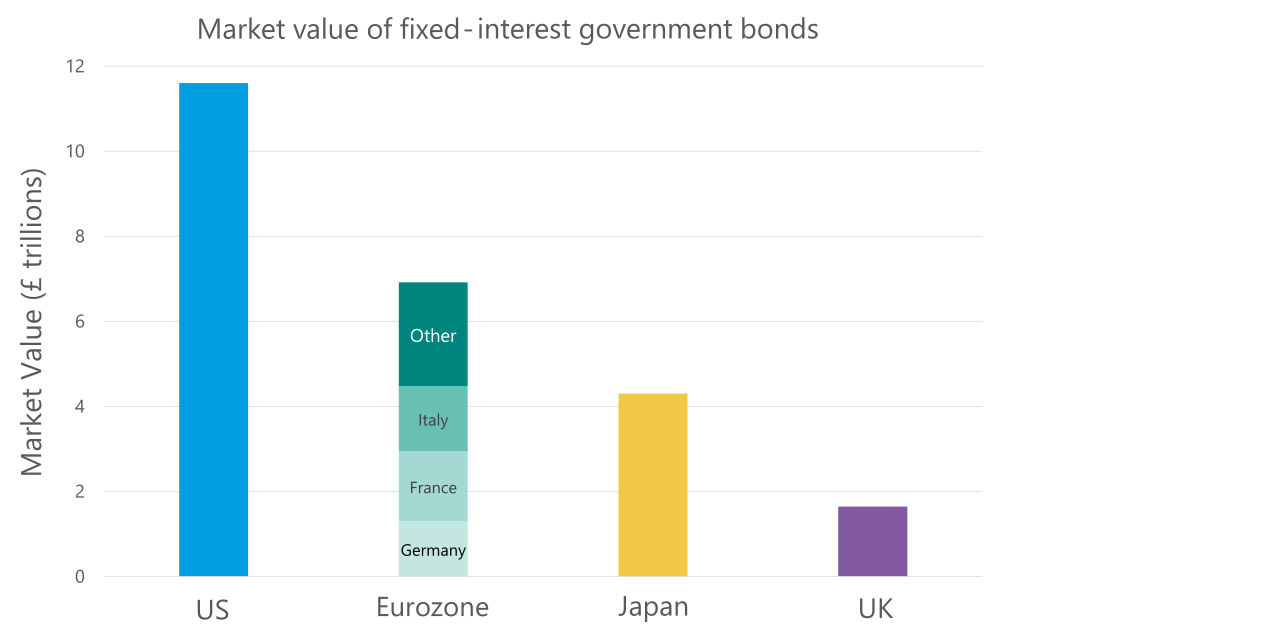
This means that UK gilts are often viewed by overseas investors relative to what is happening to US Treasuries and broader global bond markets. Over time, the yield of gilts relative to other markets has become more important, as the share of overseas gilt investors has increased from 21% in 2004, to 28% in 2014 to 32% in 2024 to become the largest type of investor.
In fact, overseas investors are even more important to gilt pricing, because much of the market has been locked away in semi-permanent holdings. This includes the second largest holding, the Bank of England’s quantitative easing programme at 24% of gilts and the 21% of gilts held by pension funds and insurance companies to match their liabilities. This means the share of actively traded gilts held by overseas investors is much larger.
Therefore, investors looking to determine how UK government bond yields will develop should make decisions based not just on what is happening in the UK, but in the US and Europe too.
Recent market movements
To get an idea of how much of global yields matter, we look at how much of the change in UK yields can be attributed to changes in a combination of US and Eurozone yields.
Since the election of Donald Trump in November 2024, the majority of the rises and falls in 10-year gilt yields can be attributed to changes in global yields. This includes periods where yields have been driven directly by the Trump administration, such as the rise in January as markets tried to adjust to the prospect of threatened tariffs and other Trump policies ahead of his 20 January inauguration.
It also includes periods such as early March 2025 when European yields rose significantly, as Germany announced a substantial increase in defence and infrastructure spending in response to a perceived weakening of the US commitment to NATO and European defence.
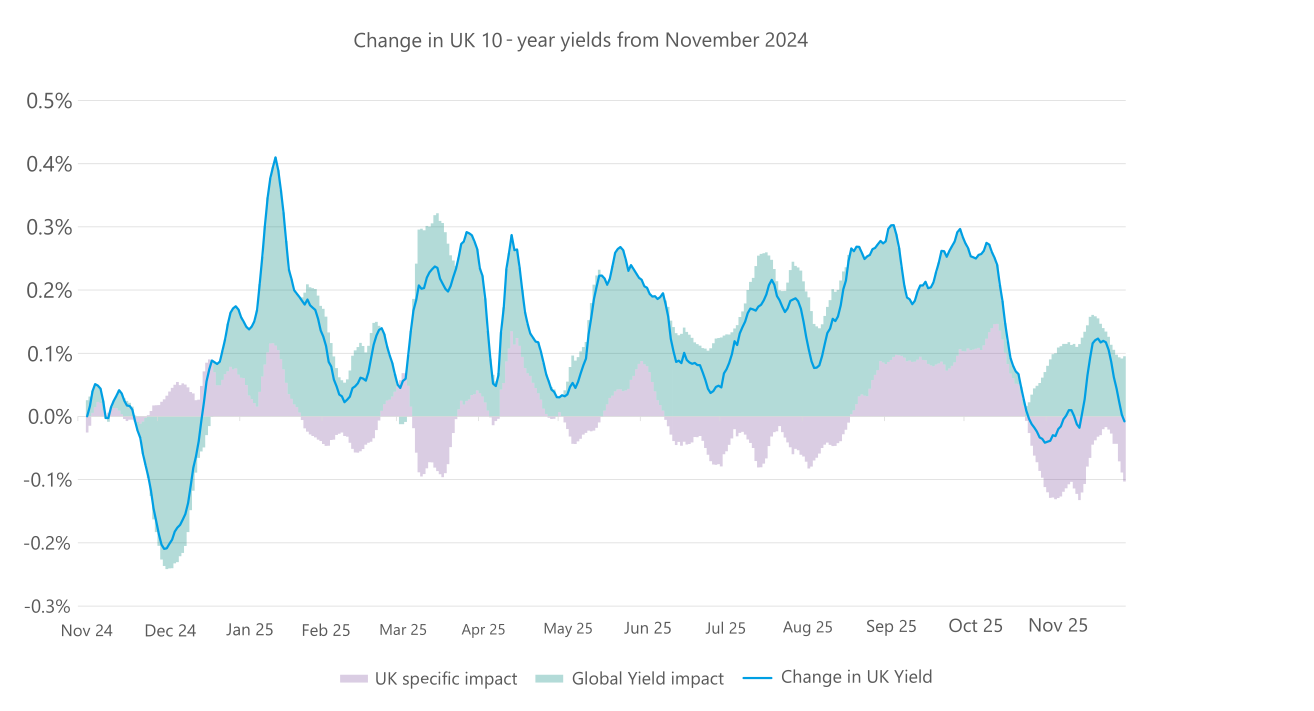
Throughout this period, the domestic impact on UK yields has been small, with many UK-specific developments that generate headlines having little impact on gilt markets. Events like the Spring Statement on 26 March and the Welfare Bill rebellion in June are visible in the chart but have not had an impact greater than 0.1% on UK yields and amount to little more than noise. Even the Budget itself, and the pre-Budget speeches by the Chancellor hinting at and then ruling out income tax rate rises had a similarly small impact. Over most of 2025 US domestic policy has had a greater impact on gilt yields than UK domestic policy.
In the second half of 2025, there have been periods where UK yields have seen more of an impact from domestic conditions, although the movement in yields still remains relatively small. Rather than politics, these movements reflect UK economic data and monetary policy decisions from the Bank of England.
From August to mid-October, the domestic impact on gilts led to a rise of around 0.2%. This period included the 7 August Bank of England meeting, where the vote to cut rates was more split than expected, due to concerns that inflation expectations would remain elevated. At the September meeting, the Bank agreed adjustments to the pace at which it sells down its stock of gilts (quantitative tightening), including more active sales than the previous year, and a greater share of sales at medium maturities (7 to 15 years).
This 0.2% change was then reversed in late October, as the September inflation data came in lower than expected, easing pressure on the Bank.
When do UK developments matter?
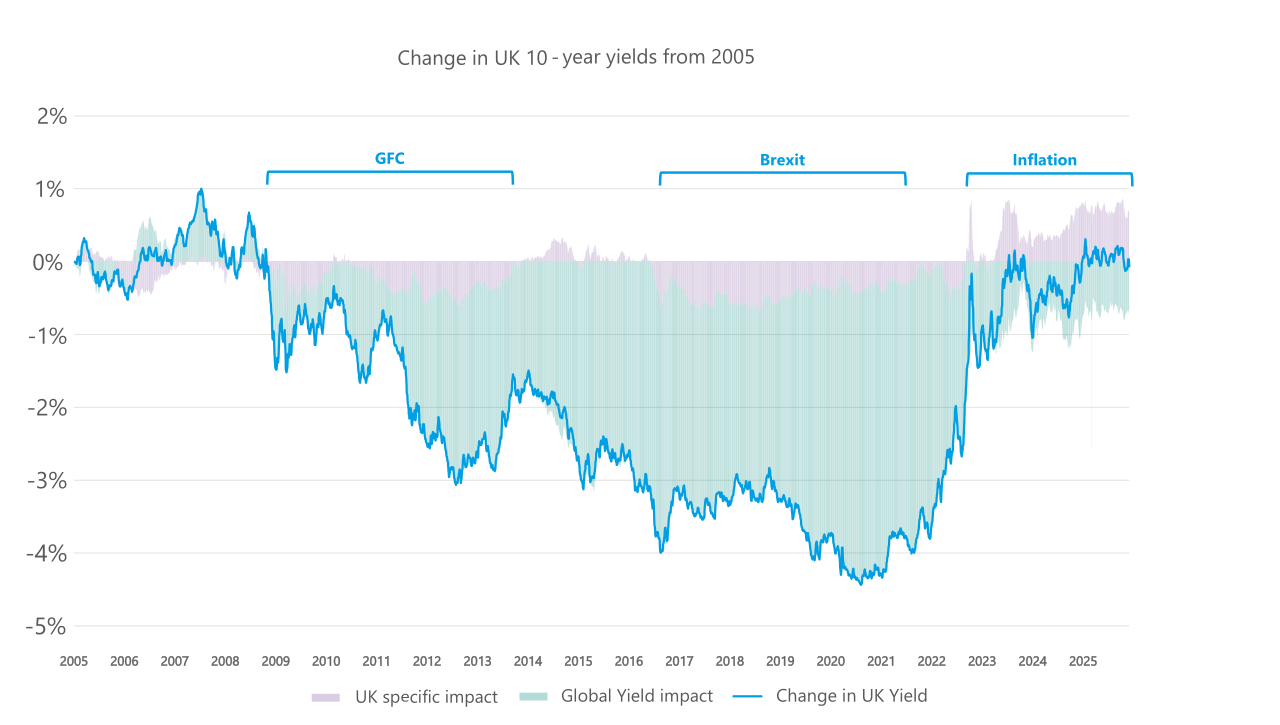
Using the same analysis and looking back over the last 20 years, we can see movements in global yields remain the dominant factor. However, we can investigate the periods when UK-specific domestic conditions have made a significant difference.
A few periods stand out and in each of these periods the UK suffered a shock to its economic model relative to other countries that threatened to permanently change the prospects for future growth and inflation, and consequently, monetary policy. These shocks therefore led to long periods where gilt yields were lower or higher than would have been predicted in the absence of that shock.
- The Global Financial Crisis (GFC) [2008/2009]: the shock undermined financial services, one of the UK’s largest industries, reducing UK growth prospects for several years and leading to lower yields.
- Brexit [2016]: future trade relations with the UK’s largest trading partner were highly uncertain. In response companies scaled-back investment, contributing to lower growth prospects and lower yields.
- The ‘mini-budget’ and elevated UK inflation [2022]: higher energy prices in the UK and Europe following the Russian invasion of Ukraine and the beginning of concerns about fiscal sustainability. Both factors raise the risk of inflation remaining elevated and therefore contribute to higher yields. As neither of these factors has been fully resolved, their impact is still priced into gilts today.
Understanding the drivers of the UK yield curve
Therefore, while domestic political developments can dominate headlines, they tend to lead to only small differences in UK gilt yields relative to global yields, unless they lead to a more fundamental change in the UK economy.
All of this is not to say that investors can ignore future Budgets, but investors looking to determine the future shape of the yield curve need to pay attention first to global factors, then to the Bank of England with speculation about government policy some way down the list.
For those investors that hedge their liabilities, the shape of the yield curve should be as much of a focus as where the 10-year benchmark yield is. For longer-term maturities, domestic factors such as issuance and pension scheme demand are more significant factors, but global conditions continue to play a key role.
If you are interested in more information on this topic, please speak to your usual Barnett Waddingham representative or the specialists in our LDI team.

Our investment consulting services
Discover more about the range of services, commentary and insights from our expert investment consulting team.
Find out more
Stay up to date
Get the latest independent commentary and exclusive insights from a range of experts at the forefront of risk, pensions, investment and insurance – tailored to your preference.
Subscribe today